
Hello all,
Just logged on my old blog which I haven't updated it for such a long time. In next few days, I think I am going to change my blog theme. It is obsolete :)
I have been searching for new themes these days and imagining how it would look like on my blog. And I want to delete some old post too. New arrangement on labels, titles, etc. Re-arrange the whole blog :)
Showing posts with label Cozy Corner. Show all posts
Showing posts with label Cozy Corner. Show all posts
Wednesday, December 18, 2013
New Things

Sunday, April 14, 2013
Great Morning News :)
I just logged into my blog account this morning and found out that my adsense account was disabled. :) How come, my not-so-updated-blog was banned? I tried to appeal to Google. But according to others references, it will not work at all. Once you get banned, then you get banned forever. :)
Saturday, March 02, 2013
Hi!
Sorry I haven't update my blog for over 6 months :)
I'll try to write and post more...been busy these days.
Sunday, December 05, 2010
Christmas Window Display Design


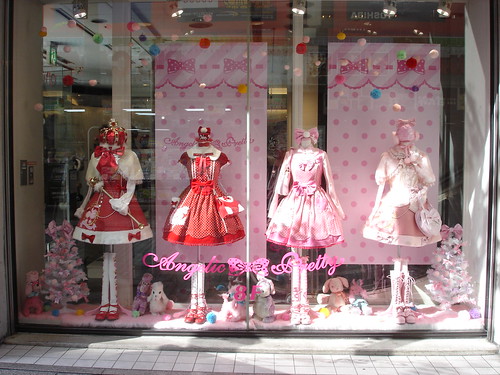
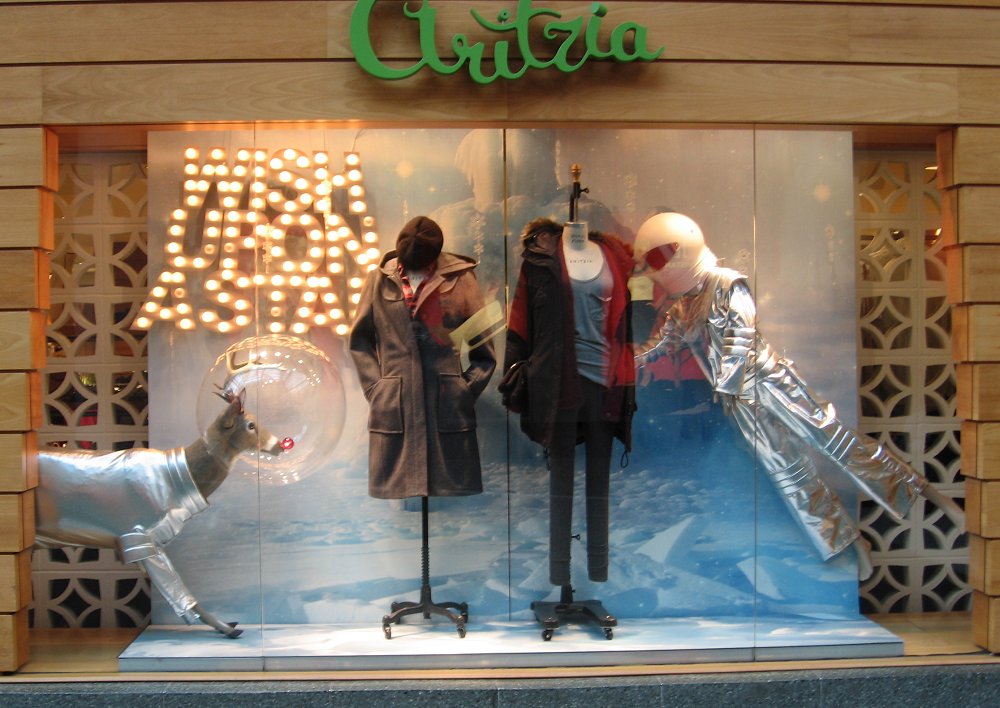
I am still interested in window display design. It's Christmas month, the festive will go for one month, it's time to change the window display design theme to welcome the spirit of shopping and entertaining. I have observed there are many Christmas item that usually added to Christmas window display design theme e.g Santa clause, reindeer, snow, pine tree, toys factory, the bells, Jesus cave. They are classic Christmas decor. We don't have to use all those classic decor to create unique Christmas window display design. We can use theme as peter pan celebrating Christmas, There are few things noted:




Every Christmas window display design must have central feature that draws attention. And everything else comes around is accompaniment which have to be harmonized or blended well with the focal point. Play with spotlights, track lights, floor lights to create impressive highlight on focal
point. If we want to make it simple design, just keep focus to create less is more look. we can put One central feature harmonized with lighting and color. Or play it with full ornate Christmas window design. Apply one color theme with full Christmas ornaments, colorful Christmas items put together, all of them mixed well with good lighting arrangement. Designing Christmas window display is not just merchandise but includes balance composition of lighting, color and space.


Saturday, June 20, 2009
Green Architecture Design, The RainShine House


This house is rated the highest green architecture in the US from the United States Green Building Council, the LEED Platinum for energy-efficient and environmentally sensitive design and construction. The RainShine house is designed by Robert M. Cain, Architect, Atlanta, Georgia, USA , AIA, LEED AP in modern architecture style with steel, wood and glass construction.
Interior of RainHouse


Saturday, June 06, 2009


 />
/>Monday, April 13, 2009
Home Decor Trends in 2009
1. Green Design
Eco Friendly material will be in high demand for home decor trends, most of consumers are now aware in environmental issues. In prediction, consuer will search and use sustainable building material which may cost them a bit high, but will sava money in long run.
2. Color Trends
According to Pantone Color Institute, Fuchsia Red, Salmon Rose, Palace Blue, Lavender, Rose Dust and Vibrant Green predicted to be popular for home decor trend in 2009. Although neutral colors are still popular. Warm and cool gray, bisque, toast and green/gold tones to create a warm ambiance. And Yellow emerging as a very versatile in color trend.
3. Lighting
From Kichler Lighting, lighting manufacturers will introduce chandeliers with more arms or multiple lights per arm, as well as pendants and wall-mounted fixtures that accept higher-wattage bulbs.
4. Pattern Trends
Pattern in home decor trends are being constantly updated and reinvented. combining classic and contemporary styles in one piece; utilizing tiny, country patterns that include calico or patchwork; and trying distinctive materials, like foil, or embellishments that cluster and layer upon each other.
5. Outdoorsy Feeling
The most successful outdoor spaces will be an extension of the home's interior style and color scheme trend in home decor. Using nature as a backdrop, she suggests pulling colors from adjacent rooms to maintain a visual connection. She also recommends accessorizing gourmet cook centers and plasma televisions with weather-resistant chandeliers, rugs and artwork to create a cozy, appealing and relaxed ambiance.
Saturday, April 11, 2009
Best Building of 2008, Business Week Version
BusinessWeek/Architectural Record annual design award winners
Here are few of best building designs according to Business Week. Some of them are good in design and function.
The winners of this year's BusinessWeek/Architectural Record awards demonstrate a pragmatism that seems appropriate in these credit-crunched times. That's not to say the designs are boring. The new headquarters for workspace design firm Haworth (above, kitted out with all its own products for potential clients to see in action) are striking, while the huge steel lattices running from top to bottom of the south sides of the towers of Poly Real Estate's Poly International Plaza in Guangzhou, China act both as decoration and as energy-saving shade. All six winning projects are emblematic of the awards' semi-official slogan, "Good Design is Good Business."
One Haworth Center: From Dull to Dramatic
Location: Holland, Mich.
Client: Haworth
Architect: Perkins + Will
Office designer Haworth replaced its dull, traditional building with a structure that has a dramatic, swooping glass-walled atrium running along one side the building.

Edmunds.com: Focus on Collaboration
Location: Santa Monica, Calif.
Client: Edmunds.com
Architect: STUDIOS Architecture
The 90,000-sq.-ft. head office for automotive research outfit Edmunds.com was designed to encourage collaboration.
More Article on BusinessWeek
Monday, April 06, 2009
History Of Apartment Building Design Part II


History Of Apartment Building Design Part II
In previous article, I wrote about luxurious apartment design and now about low income apartment design to accomodate lower class residents which was dominant in early 20th century.
LOW INCOME BUILDING DESIGN
For low- and middle-income tenants, apartment building design was a combination between aesthetic and economic viability, even sometime abandoned the sanitary concern and aesthetic to get more profit. Apartment building was great issue in social and housing reform.
This was a challenge for architects, they used this apartment buiding design to explore new materials, prefabricated structural system to provide affordable worker housing. The government also took part by sponsoring the housing projects. Examples can be seen from:
1. The housing policy of the Weimar Republic generated pioneering modern apartment buildings for German cities
2. J.J.P.Oud’s Kiefhoek housing (1925), an International Style garden apartment complex built in
Rotterdam. Both the garden apartment and the high-rise form of the apartment building
were explored by architects throughout the mid-20th century.
3. A key high-rise example in London is Highpoint I (1933–35), designed by Berthold Lubetkin and Tecton.
These two primary apartment building design forms—the mainly urban high-rise and the suburban garden apartment—became internationally prevalent by the 1930s. They distributed the rising cost of elevators, ventilation, and other systems-related apparatus by using modern building materials to create taller structures with more living units. Garden apartments were suitable for lower-density development on the urban periphery, where land was less expensive.
POST WAR PERIOD
In post WW II period, the housing crisis became the great issue and the European government again sponsored the construction of housing projects, to move the economy as well. And then followed by Us government. During this period, the dominant style was the international style modernism particularly slab-form high-rise developed by Le Corbusier.
as we can see from Le Corbusier’s Unité d’Habitation (1947–53) at Marseilles, France. Unite d’Habitation is a 12-story horizontal slab raised on heavy tapered.
Noteworthy examples of apartment buildings done in a postwar modernist vocabulary include ATBAT housing (1951–56,Shadrach Woods and J.Bodiansky) in Morocco and Peabody Terraces (1964, José Luis
Sert) in Cambridge, Massachusetts.
During the postwar period, large-scale developments, including multiple high-rise apartment buildings, site planning, and amenities such as shopping and recreational facilities, became more prevalent.
By qsepti
source: 20th century architecture
Wednesday, April 01, 2009
History Of Apartment Building Design Part I

History Of Apartment Building Design I
Apartment building is an integral part of human density in big cities. It changed the culture, habit in society. Due to the high growth of population especially in big cities in early 20th century, created the housing problem. The high density, shortage of land development and degradation of quality of life. The vertical building for housing was the answer to this matter. The verical building was considered as logical and effective solution.
An apartment building contains multiple dwelling units of one or more rooms. Including bathroom and kitchen for each unit, which are the basic aspects of the 20th century apartment building. And also heating, ventilation, air conditioning, and other system are provided as supporting service.
The efficient use of space is very important in apartment building design, just like any other commercial building design. And the efficiency must be balanced with comfort, this requirement is challenging especially when it comes to design apartment for low income tenants. Apartment building design in early 20th century usually provide public areas in minimal requirement such as small lobby, laundry room, roof deck, or swimming pool for more luxurious types.
LUXURIOUS BUILDING DESIGN
In the early 20th century, most of architecturally good design apartment buildings were dedicated for upper-class residents. Living in a full-service apartment building could provide a luxurious home at much smaller cost than maintaining a single-family house.
Rising land values in many cities made sole ownership prohibitively expensive even for the relatively well off. The buildings architecture moslty used the elements of Classical Revival and Italian Renaissance Revival as evidenced by the lavish examples built in cities such as New York, Chicago, Los Angeles, London, Paris, and Vienna. The dominance of historical styles in apartment building design in that period indicated the fashionable design mode for most commercial and domestic structures during the early 20 th century.
Wednesday, March 18, 2009
Deconstructivism

DECONSTRUCTIVISM MOVEMENT
Decontructivism is a design style or movement that emerged in architecture, interior design, art, graphic design and philosophical literature in late 1980s early 1990s. Deconstructivism movement often refers to distorted, angular form, set in conflicting geometry and displaced.
Deconstructivsm generated iconoclastic architectural design as seen in some works, such as works of Zaha Hadid, Bernard Tschumi, Peter Eisenman, Morphosis, Rem Koolhaas, Daniel Libeskind, and Frank Gehry.
One of the example of deconstructivism movement is the work of Bernard Tschumi's design for the Parc de la Vilette in Paris. Tschumi proposed a nonhierarchical grid of dispersed pavilions instead of a more traditional building, echoing deconstruction’s own challenging of linguistic arrangements.
The beginning of deconstructive movement started in 1988 an event exhibition held by Museum of Modern Art in New York City with “Deconstructivist Architecture” and Tate Gallery in London with “Deconstruction in Art and Architecture”
Deconstruction emerged out of the post-structuralist tradition of literary theory, which in opposition to structuralism, stressed the slippage and fluctuation of meaning that is always at work in the process of linguistic and cultural signification.
by qsepti
Monday, March 16, 2009
Sustainable Building Design

In this world where the term of global warming is spreading, the sustainable architecture design is definitely required. It becomes the sacred words in the world of architecture. Sustainable building design refers to architectural design with zero emission, energy-saving building, refined building, any green architecture design that environmentally friendly and contributes to the protection of the organisms diversity and nature recovery.
In past century, architectural design and build required environmental sacrifice. In this century, the architectural design using natural energy, blend with nature and can lessen the environment burden can be sustainable to time is required.


Green architecture, Urban regeneration, bio climatic design, environmental architecture, are new important concepts in this century and applied by architects around the world, the sustainable building design concept starts being used from the vernacular houses to large scale urban development. And this emerging concept is to develop a form of understanding construction in close relation to nature both interior and exterior and the usage of alternative energy sources as well as to improve the quality of life, the concept of sustainable building design finally challenges the professionals to research the latest and imanigative innovation for architecture and design.
by qsepti
Saturday, March 14, 2009
Architectural Drapery

Architectural Drapery, The Cascade Coil Drapery
Architectural Drapery mesh interweaves weatherproof copper and stainless steel wire. Los Angeles–based designers ARYA Group used the mesh for the Village School gymnasium facade in Pacific Palisades, California.
Then carried it indoors for window treatments, light fixtures, and the curtain on a stage at one end of the gym. It's also available in a natural aluminum finish, nickel plated, or colorfully painted.
This is an architecture and interior design idea you can apply to your home design, drapery combined with wired copper ball in colorful paint. Sure looks unique and playful.
Thursday, March 12, 2009
Elements of Interior Design
INTERIOR DESIGN ELEMENTS
To design an interior space there are few elements that must be considered carefully for designers in order to create good design and solve the problems in space planning.
SPACE
The most essential element in space planning. There are 3 types of space element, flat space, perceptual space and actual space. Flat space is where there is no illusion of depth, consists height and width as seen in 2 dimensional drawing. Perceptual space is where the space is illusion like photographs or perspective drawings. We can create the illusion of depth by using shadows, colors, lines, mirrors, and lights.
The designer should have a complete understanding of the dynamics of perceptual and actual space and the difference between them,even though it may seem pretty obvious.The former is an illusion; the latter is a fact. But actual space can also be manipulated to create illusions by using other design elements like light, color, texture, line and reflected surfaces.
FORMS
The importance of forms in architecture-interior is obvious. Everything we touch, see, or feel is manifestation of forms. Form is the antithesis of space, i.e., if form is consideredto be a positive mass, then space would be considered negative. Forms can be either straight,curved, or irregular
LINE
There are 2 type of lines: straight and curved
Straight line can be in horizontal, vertical or diagonal. Basically straight lines will give impression of strengh, firmness and simplicity. Horizontal lines tend to suggest of repose, tranquility and make the illusion of wider room. Whilst diagonal lines suggest motion and energy, activity, dynamism and restlessness. And vertical lines can have an uplifting quality and tend to suggest strength,aspiration and dignity. They also express masculinity and formality. also creating the illusion of increased heights.
TEXTURES
Textures refer to smoothness, roughness,coarseness or fineness of object's surface. For example: 1. Totally smooth surface, such as worktops, painted walls, ceilings, windows and built in furniture
2. The rough textures associated with concrete and brick, stucco and stone
3. The soft sensation of a pillow, a plush pile carpet or gentle upholstery or curtains.
4. The delicate and sensuous texture of live objects such as human skin or leaves and flowers,
and even the kinetic texture of rippling water.
PATTERN
Pattern is formed by the use of line, form, light and color. Becareful in using pattern, it can make distractive room if not balanced. Pattern, in essence, is created by the juxtaposition of related positive and negative visual elements in a given space.It works best with the element of color.When working together,they act as an accent to catch the eye.When pattern is blended with color, they work in harmony. Pattern helps create instant visual impact and mood.
LIGHT
Lighting serves two basic needs—to illuminate a task and to establish a mood.It shapes the
look and feel of a space by highlighting certain areas and playing down others. Playing with lights in architecture and interior space can bring out the positive energy and can create fascinating eye catcher.
COLOR
Colors can give the psychological effects if it's applied in interior space. Whether negative or positive effects. Designers must be very careful in choosing colors. Some requirements should be considered in making color plan
Tuesday, March 10, 2009
Bamboo Flooring
 Bamboo Flooring
 Bamboo is associated with tropical nature. It is asian origin, it's identical with china, japan and other asian countries. If you want to create tropical ambience with a bit asian touch, bamboo is the right choice. Bamboo is new alternative material other than wooden flooring. Not only to create traditional or oriental looks but bamboo flooring today is perfect floor material for modern and minimalist interior design. Bamboo is strong, light and used as material for construction, for houses, fences, furniture and handy craft. Bamboo has beautiful natural grain you will love.
The form of this flooring is not like the real bamboo we always imagine, long round stalks which is not comfortable flooring to walk on. The bamboo flooring we have now is flat and smooth just like any other laminate flooring or hardwood flooring. Thanks to technology which turns bamboo into short laminated planks. Bamboo as flooring can be very strong and durable, a very stylish floor material that will enhance your interior sphere and add the property value plus it's environmentally friendly because harvesting bamboo is easy and not as complicated as timber plants.
Caring Bamboo Flooring
Although bamboo flooring is well-known for its durability and hard wearing, caring bamboo flooring is necessary to protect the appearance and to keep the flooring at its best. Few things can cause damage to bamboo flooring such as dirt, dust and grit even high heels shoes can scratch its surface. Few things that must be taken care:
Scratch.
scratch can get from dirt, grit or high heeked shoes. Dont drag heavy furniture across bamboo flooring this can cause deep scratch that might be hard to repair. Actually the rules also are applied for any wood laminated flooring. Place protective pads, use soft fabrics on legs of furnitures.
Discoloration
If you use rugs, dont use rubber backed rugs due to the discoloration caused by the rubber. Avoid direct sunlight. It can cause discoloration if the flooring is exposed to sun light in long period, use some shades to avoid direct sunlight on windows.
Stain
Clean spills immediately, it can cause the stain which is hard to remove or even could stay permanently. Use recommended cleaning agents by your supplier or manufacturer in order to keep bamboo flooring shine and free of stain.
 Buying Bamboo Flooring
There are few things you should consider in buying bamboo flooring.
1. The Price, Bamboo Floorings are available in price ranges, the lowest is around $2. Choose which suits your budget. This price based on how much UV coating is used for bamboo flooring finish. And the hand scraped bamboo comes in higher price, anything realted to hand made is quite expensive.
2. Bamboo Grain, Bamboo flooring comes in vertical and horizontal grain. You will see howbamboo slats are laminated together.
3. The Colors, This part is just like choosing wooden flooring. Bamboo are availabe in many colors, choose which match your interior design style, room traffic, whether heavy or low traffic and your budget of course.
by qsepti
Saturday, March 07, 2009
How to Renovate Home in Low Budget
Home renovation is simple way to create a new athmosphere to our home. We dont need to worry about the cost we are going to spend for home renovation, we can do it in limited budget if we know the tricks.
The first thing to do is to decide the concept of new renovated home. We must do this very detail and complete. This to avoid the mistakes in the process of renovation, which will make the cost higher. The complete concept also to make the work run faster. We can decide which part of the house that need to be renovated.
The perfect time to do renovation, wheater and season will affect to the work construction. It can slow down the renovation process if the timing is not perfect and can double the cost.
Do survey the building materials to get good bargain. As one of alternative to low the cost, we can choose the used building materials but we have to make sure they are in good condition. There are few materials we must get in new and in good quality such as for plumbing, electricity, roof, wall. Also material for fondation and structure.
Choose good, reliable and registered contractor, we can get recommendation from friends or relatives about good contractors.
by qsepti
Friday, March 06, 2009
Choosing the Right Home Design
Choosing the Right Home Design
By Alan Dunne
This is a great article that we found about choosing home design.
One of the issues when you begin the search for your perfect home is that you can become a little it overwhelms by the many choices you have at your disposal. Some people of course truly relish collecting some books and choosing from the many home designs that are available. What you need to do is to narrow down your search by just sitting back and and considering what type of home you would like to live in.
A good place to start before you overwhelmed with choice is to consult with your architect. And architects job is to not only design a home he also needs to identify his clients needs and try and create what they are looking for.
What a good architects will do is they will develop a program to try and get from you what you expect from your new home and help you to recognize from an his point of view what needs to be done but also to recognize what your personal needs are for your home. The kind of areas that he will look at our what your needs are for you home not just for today but in the future, so do you have children?, are you planning on having children?, would you need to accommodate aging parents?
Read more on Ezine....Wednesday, March 04, 2009
Bathroom Design For Handicap
Bathroom Design For Handicap
By Adriana Umana
The issues of handicap bathroom design are not that difficult to overcome, and really it's quite easy for any organization to provide at least one stall for the handicapped, as per regulations now. These issues are ease of access, comfort in use for the handicapped person, and ease of cleaning. All these aspects of bathroom design must be taken into account for a bathroom that is truly usable by the disabled. This is now very necessary for public restrooms in order to avoid legal action or even boycott on the part of those concerned.
Resources for Handicap Bathroom Design
The best resource for information on creating good handicap bathroom design is the Americans with Disabilities Act website. The ADA has lots of advice on all aspects of bathroom design for ease of use and independence on the part of handicapped users. The priority for any organization wishing to provide facilities for the disabled will be designing a barrier free handicap bathroom. Being able to reach the toilet, the handbasin and the towels are key issues for disabled persons.
More Article.....
Monday, March 02, 2009
Soft Flooring in Architecture and Interior
 linoleum flooring
There are few types of soft flooring in architecture and interior. They are sof on foot and warm. Different than hard flooring
1. Linoleum
Made of linseed oil, resin, cork, filler and pigments. Available in numerous color, patterns and marble look. It comes in tile or sheet and need adhesive to be applien on the floor. Linoleum is warm floor.
2. Vinyl
made of PVC, resin, filler and pigment. It is warm flooring, available in tile or sheet form and in many colors, patterns, textures and thickness. It's oil, water and fat resistant.
3. Rubber
Made of natural synthetic rubber, filler and pigment. Available in tile or sheet, sometime with foam backing for acoustical purpose. It's warm fooring, resilient and can be applied as loose floor on concrete without adhesive.
4. Cork
It's natural product, made of bark of oak. Available in tiles and mostly in natural color gold to dark brown. It's categorized as warm and quiet flooring, need adhesive to be aplied on floor and seaaled with polyurethane.
5. Carpet
It's type of flooring made of fiber, synthetic or natural fiber. Usually the fibers are woven, knitted, tufted or bonded. Synthetic fiber used are nylon, acrylic, viscose rayon, polypropylene and polyester. Natural fiber are sisal, cotton, jute, coir, seagrass or wool. They are warm flooring and soft on foot available in numerous pattern and color especially for synthetic carpet fiber.
Read More......
1. Linoleum
Made of linseed oil, resin, cork, filler and pigments. Available in numerous color, patterns and marble look. It comes in tile or sheet and need adhesive to be applien on the floor. Linoleum is warm floor.
2. Vinyl
made of PVC, resin, filler and pigment. It is warm flooring, available in tile or sheet form and in many colors, patterns, textures and thickness. It's oil, water and fat resistant.
3. Rubber
Made of natural synthetic rubber, filler and pigment. Available in tile or sheet, sometime with foam backing for acoustical purpose. It's warm fooring, resilient and can be applied as loose floor on concrete without adhesive.
4. Cork
It's natural product, made of bark of oak. Available in tiles and mostly in natural color gold to dark brown. It's categorized as warm and quiet flooring, need adhesive to be aplied on floor and seaaled with polyurethane.
5. Carpet
It's type of flooring made of fiber, synthetic or natural fiber. Usually the fibers are woven, knitted, tufted or bonded. Synthetic fiber used are nylon, acrylic, viscose rayon, polypropylene and polyester. Natural fiber are sisal, cotton, jute, coir, seagrass or wool. They are warm flooring and soft on foot available in numerous pattern and color especially for synthetic carpet fiber.
Monday, February 09, 2009
Color Me Red
Red color refers to hot color which are strong and aggressive, red in full saturation on color chart is considered as the strongest color. Red color attracts attention often used in signage design, posters or headlines. Red is emphatic color which signifies danger and romance, impression of courage.
Red In Interior Design
Red color affects people in certain ways such as increasing blood pressure and stimulating neurons system. Since it is believed that way, often used in restaurants or cafes to stimulate appetite and conversation. It is compelling color also can create strong architectural focal point in interior space or building. Colors can give illusion of proportion of rooms, which can appear advancing, make walls seem closer and large room appear more demure. This perception can be obtain from red color. in this classic style room, red color is applied on one side of wall as focal point. it stands out among neutral colors (white). Red color in this room creates the sense of elegance.

The red color is nicely blended with all furniture and artworks in this room. Because this room is large with high ceiling makes the feeling of oppression is vanished, even the whole walls are painted in red. It creates the impression of elegance and royalty.

This room is totally painted in red and only white as an accent. It looks so nice and brave though, I could get the sense of hot temperature by staying in that room
 I like red color in this room. Applied in public space, in elevator hall which is long and narrow space, a minimalist room. Personally, I like red color in public space even the whole interior space covered in red. In public area, people would come and go quickly they wouldn't stay long and only the sense of joyful that would stay.
Technorati Profile
Subscribe to:
Posts
(
Atom
)
COPY

My Counter

