Showing posts with label Lighting. Show all posts

Sunday, December 05, 2010

Christmas Window Display Design


CHRISTMAS WINDOW DISPLAY DESIGN
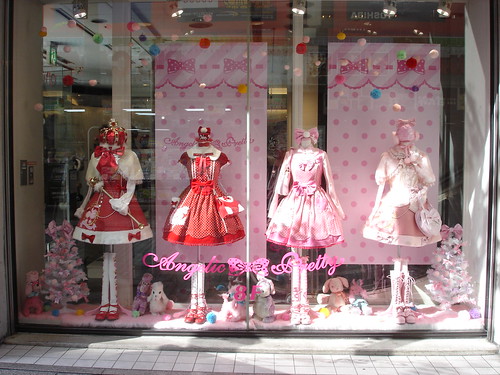
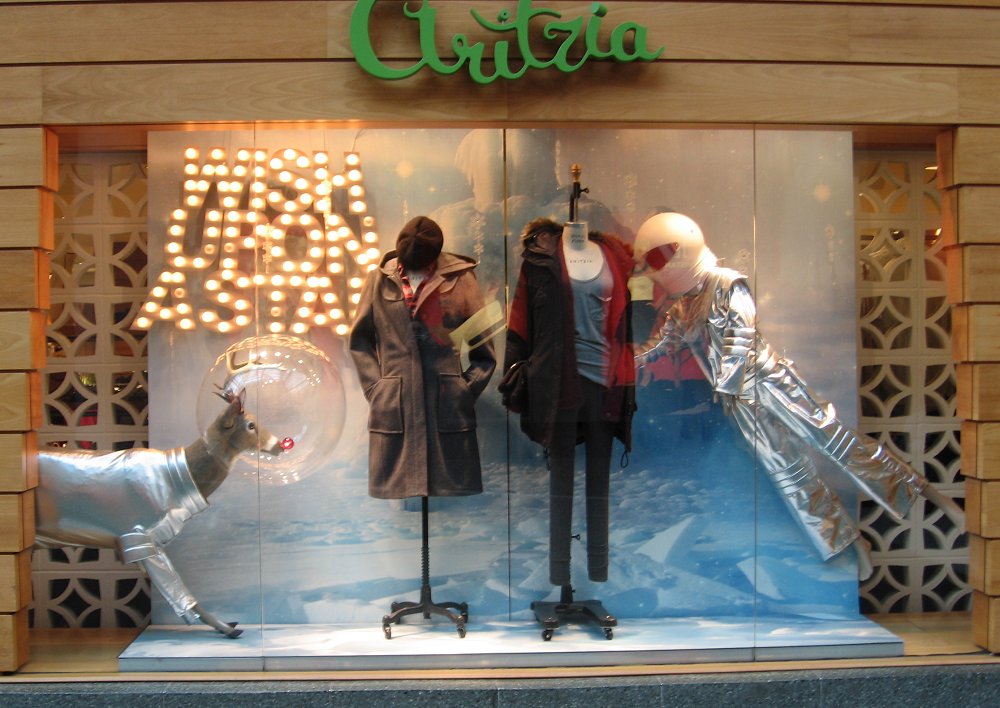
I am still interested in window display design. It's Christmas month, the festive will go for one month, it's time to change the window display design theme to welcome the spirit of shopping and entertaining. I have observed there are many Christmas item that usually added to Christmas window display design theme e.g Santa clause, reindeer, snow, pine tree, toys factory, the bells, Jesus cave. They are classic Christmas decor. We don't have to use all those classic decor to create unique Christmas window display design. We can use theme as peter pan celebrating Christmas, There are few things noted:





Every Christmas window display design must have central feature that draws attention. And everything else comes around is accompaniment which have to be harmonized or blended well with the focal point. Play with spotlights, track lights, floor lights to create impressive highlight on focal
point. If we want to make it simple design, just keep focus to create less is more look. we can put One central feature harmonized with lighting and color. Or play it with full ornate Christmas window design. Apply one color theme with full Christmas ornaments, colorful Christmas items put together, all of them mixed well with good lighting arrangement. Designing Christmas window display is not just merchandise but includes balance composition of lighting, color and space.


Read More......

Monday, May 11, 2009

History Of Architectural Lighting Part 2

HISTORY OF ARCHITECTURAL LIGHTING II

ARTIFICIAL LIGHT
Flame was used in ancient history in mankind, first was burning branches was used then special wood to get long lasting light and artificially aesthetic and lead to the use of flammable material. And the development of flame had changed the artificial light widely. The invention of oil lamp and candle, made man realized how small and compact source of light could be.

The oil lamp represented the highest form of lighting engineering progress for a very long time. Then the lamp were developed into sorts of magnificent chandeliers and sconces and available in a wide variety of styles but the flame, and its luminous power remained unchanged.
The development of oil lamp lead to some inventions such as the lenses, argand lamps and finally the invention of new light sources


MODERN LIGHT
The invention of gas lighting was the basic of modern light source. Gas lighting was demonstrated in a series of pilot projects such as a lecture hall in Löwen lit by Jan Pieter Minckellaer and a factory, a private home and even an automobile lit by the English engineer William Murdoch. This new light source achieved as yet unknown illuminance levels due to the high cost and manufacture problems.

Then incandescent gas light was doomed to go the way of most lighting discoveries that were fated to be overtaken by new light. The needs to have more efficient lighting source led to scientific research of the electric lamp in 19th century, it showed up and embarked on its career in its brightest form. The beginning of modern light sources. The Moore Lamps was used for advertising purposes and in architectural spaces as contour lighting. And mercury lamp was also used due to its good luminous efficacy.

After hundreds of years, artificial lighting changed dramatically and basic lamps were developed to the standard lamps as we use today. The artificial lighting is used in interior and exterior space for artistic and safety purposes. New studies in lighting specialist emerged to provide standard form of lighting, psychological effects of lighting and for guideline lighting in general.

Read More......

Friday, April 24, 2009

History Of Architectural Lighting Part 1

HISTORY OF ARCHITECTURAL LIGHTING I
I am in the mood of writing history in architecture and interior design lately, and now I am going to reveal a brief history of architectural lighting. :)
There were 2 sources of light for centuries ago, daylight as natural light and flame as artificial light.

NATURAL LIGHT
Daylight of course had impact in architecture lighting design in the past centuries, The building must adapt to requirement for natural lighting, for example the size of the rooms were designed by the availability of natural light as well as ventilation. This condition were developed in architecture design around the world in different climatic zone. We can see it from old and historical buildings around us.

In the cooler climate, the architecture building were built with tall and large windows to allow the light into the building, as much as possible.
Different thing in sunny and dry climate, where the sun shine everyday. Dominantly buildings with small window with reflective exterior walls.


To play with aesthetic quality in architectural lighting with natural daylight, we can see from the architectural details in the building, Certain elements were designed according to the natural light available to get the spacial effect through the light and shadow. The elements were columns, reliefs, ledges, diffusers on windows, and facades. The perfect example are old churches from baroque period or ancient Egyptian pyramid. Those building were built with special lighting effects to adapt the natural light.
Because architectural construction, especially in old period have similar function with astronomical clock, with detailed design and high accuracy to create special lighting effects only occurring on significant days or during particular periods in the year, when the sun rises or sets, or at the summer or the winter solstice.

Read More......

Tuesday, January 13, 2009

Basic Lighting

Basic Lighting – Lighting Style By Kevin Mcloud. There are four types of lighting:


1. Ambient light.

Which is around us. The effect is calming and neutral. No glare to distract eyes. It should be always dimmer able as discrete as possible. Wall washer is one of source of ambient light, they illuminate a wall so it can play the role of reflector too.

2.Accent Light.

This type of lighting enables you to highlight some features such as picture, art element, certain object. Ambient light flattens the room but accent lighting brings back the character and interest.

3. Task Lighting.

It is used to improve visual clarity, and using of those lighting fixtures help to prevent tiredness and focus the mind of the job.

4. Decorative Lighting.

It may just the way a spotlight illuminates the colored glass of some bottles and throw colored shapes onto a surfaces or highly decorative chandelier or neon sculpture. Just choose carefully your interior lighting fixtures to create the ambience that you want.

Read More......

Wednesday, December 17, 2008

Reducing Glare in Lighting

How to reduce glare in lighting design. Especially designing for aging people here are a few solutions.

  1. Do not expose the lightbulb directly. Place a shield between people and lightbulb to conceal the light. Usually in shaded transparant material or use interior lighting fixtures with some type of diffuser.
  2. Pay attention in selecting materials. Particularly for floor, countertop, furniture finish. They can create glossy-mirror look reflecting the brightness of light source. Use non-glossy finish for materials.
  3. Avoid placing bright light against dark celing.
  4. Indirect lighting is much better. It creates the impression of brightness and the shadow is filled in. The room looks brighter as well.
  5. Create a cove lighting on the wall, this will look nice for room with high ceiling. let the light washes the upper wall and celing enhancing soft ambient light. So, downlight might not be needed.
  6. Use light color finishes on walls and ceilings to soften the effects of bright light sources and to reduce shadows. Avoid making interior of home looks darker than exterior.
  7. It is important to balance light levels within spaces and between adjacent spaces, most people cannot negotiate sharp transitions from bright to dark spaces and vice versa as easily. Use dimmer to balance the light.
  8. Create uniform ilumination, avoid using pattern like using track lighting which creates scallops on wall or floor. This pattern can be confusing and disorientating for aging people.
  9. It is important to place the light close to the task. so it will not create shadow, like lighting on writing tabel or kitchen countertop.

qsepti

Read More......

Wednesday, October 01, 2008

Modern Lighting Design

These interior lighting fiuxtures will create beautiful shadow. With colorful lights emerge the colourful shadow. It will enhance the atmosphere of your interior design. These are from koziol, available in hanging and floor lamp.

STIXX
The expressive impact of this lamp is enhanced to perfection by light. The myriad reflecting surfaces make the elements shimmer and shine, creating beautiful effects.


FUSION

The fascinating texture of this lamp, produces a mesmerizing interplay of light and shadow, making the lamp a design objec t in its own right. It can be showcased solo or in a rainbow chorus , and the wide choice of colors provides rich potential for an array of atmospheres.


ALICE

This fixture emanates a sensuous, warm glow, colourful pattern-shadow and adds atmosphere to any interior.


Read More......
Template by - Abdul Munir | Daya Earth Blogger Template